
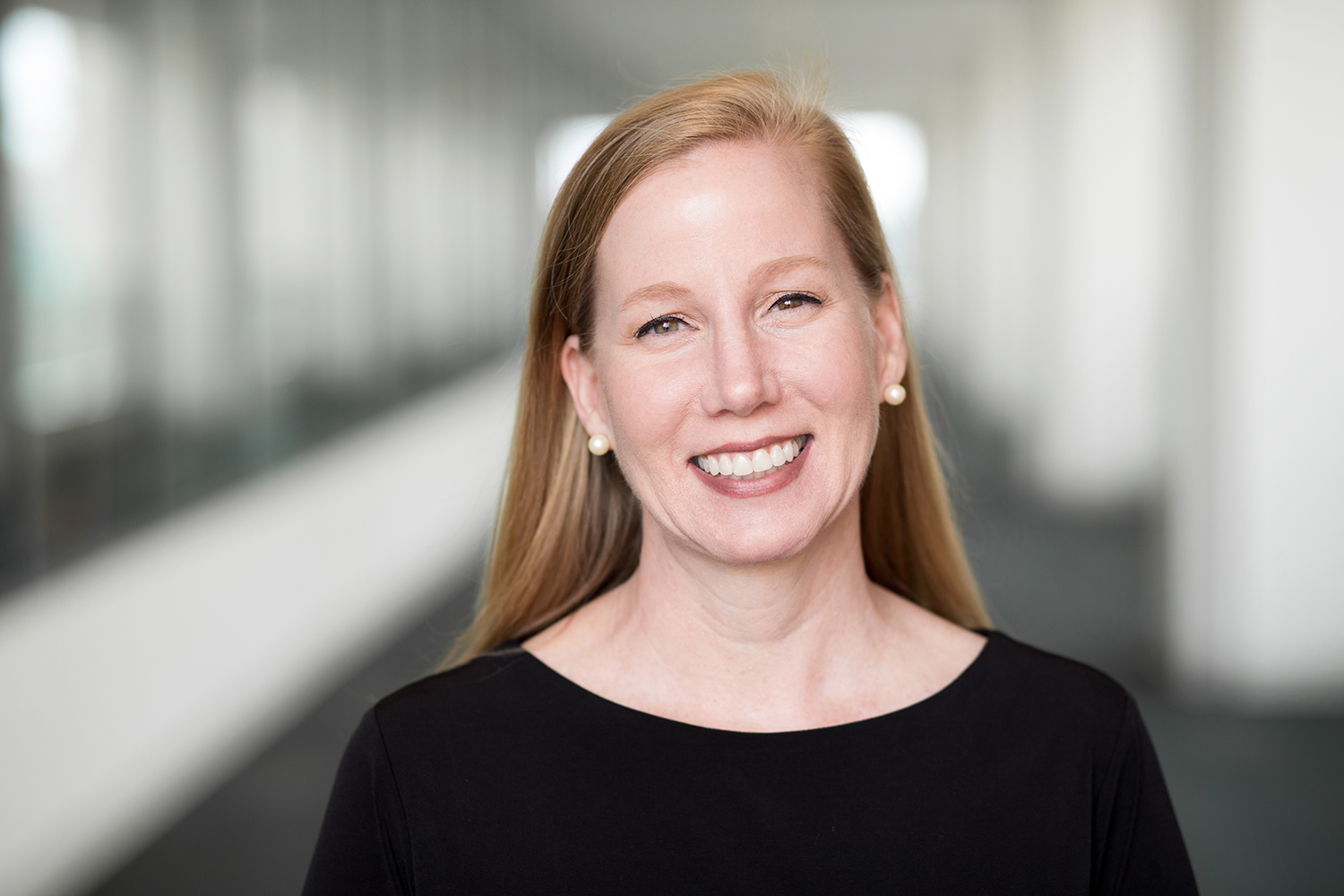
Last month, Coke Morgan Stewart, the former Deputy Director of the United States Patent and Trademark Office (USPTO) announced she would be stepping down from her post to return to the private sector (July 27, 2026 ip fray article). At the time of writing this, the USPTO has not made any official announcement regarding when a new Deputy Director might be appointed (or who they might be).
Then, last week, the Council for Innovation Promotion (C4IP), a high-level, bipartisan advocacy group made up of former high-ranking U.S. government officials and judges with responsibility for IP, announced that she has been appointed its President and CEO (August 17, 2026 C4IP press release).
This week, Ms. Stewart sat down with ip fray to discuss the new role, reflect on why she stepped down from her post at the USPTO, and respond to criticisms of the changes she helped make during her time as Deputy Director.
Ms. Stewart has held a vast range of roles in the U.S. patent ecosystem, including several posts in private practice, education, government, and now advocacy. She previously spent over a decade at the USPTO between 2011 and 2021, where she worked as a senior policy advisor in the office of the solicitor and acting chief of staff, among other things. Ms. Stewart also worked for O’Melveny & Myers, Kaye Scholer, Howrey, and Verner Liipfert Bernhard McPherson & Hand, in addition to being Deputy Attorney General of the Virginia Office of Attorney General and a leader of the American Bar Association’s Section of Litigation.
While this range of positions itself has been her biggest career highlight, as it has allowed her to gain a multi-faceted perspective on patents, Ms. Stewart is particularly excited about this next post:
“To be at this stage of my career and really choose what that next opportunity is going to be… and it being a full-time advocacy position is a highlight for me.”
This diversity of experience will be a huge asset in her new role at C4IP, she says, which strives to educate the public and policymakers on the importance of strong and reliable IP rights. C4IP also aims to ensure the U.S. competes internationally on critical IP issues and builds support for legislative reforms that champion a strong, competitive, and modern IP system for the U.S.
Easiest done from the outside
Ms. Stewart was appointed Acting Director of the USPTO at the beginning of U.S. President Donald Trump’s second term in January 2025. Coming in on that first day, she had “dreams” of policy reforms. But the reality is that running the office entails a lot of management; it’s a $5 billion organization with 14,000 people, two judicial systems are involved, and almost $1 billion is spent on IT a year.
The first responsibility as acting director in a new administration is running an agency through its transition. Then, after being made deputy to a new director, the focus becomes ensuring a smooth transition for them. Once that was in place and the already-started projects were finished, Ms. Stewart says the USPTO began a new chapter focusing on operations and AI, which she thought to be a good moment to focus on what makes her most excited: advocacy.
While USPTO leadership can have a huge impact on policy, she thinks that legislative reform is easiest done from the outside. Within the office, a lot of time is taken up by operations, policies, and procedures. There is much less time spent on legislation.
“There is a concern that the pendulum is swinging back and forth from one director to another, or one administration to another. While there isn’t an agreement on what the reforms should be, there is consensus that the changes need to be permanent, and that is something I can better do from the outside.”
Blowing a hole in the agency’s credibility?
During her term as Acting Director, Ms. Stewart brought in an array of initiatives, including – perhaps most controversially – reinstating the NHK-Fintiv framework as it existed before Director Vidal, which allowed the office to deny more IPRs amid parallel district court litigation (February 28, 2025 announcement by the USPTO). She also issued a memorandum requiring Director Review of patent owners’ arguments for discretionary denial prior to any merits proceedings in AIA post-grant challenges (March 27, 2025 ip fray article). In April, the PTAB recorded its lowest-ever monthly tally of new IPR petitions, suggesting that the harsher line on IPRs, which began under Ms. Stewart, had its intended effect (May 4, 2026 ip fray article).
But some of those changes came in shortly after Director Squires had assured Congress that he would study these issues before making changes, blowing “a hole in the agency’s credibility” (August 14, 2026 Tom Krause Substack), former Deputy General Counsel for IP Thomas Krause wrote on his Substack last week.
This is an “unfair” interpretation of the Director’s testimony, Ms. Stewart says. The Director had not claimed he would maintain or revert back to every policy in effect under former Director Kathy Vidal, if he were confirmed. And, while many at the office were constantly studying and collecting data, a new director like Squires, with a lot of experience in patents, is equally not going to come in and not make any changes for a full year. He will consider, in consultation with the Secretary, what is working and what, if any, additional reforms he wants to make.
“Both things can be true,” she adds, “you can come in to a new Administration that already has had personnel and policy changes – and you can study what to keep and what new things to put in place.”
Further, Ms. Stewart reportedly told another media outlet that the changes implemented by the USPTO were fueled by the nation’s “patent crisis” (August 5, 2026 Law360 article). The crisis she was referring to, she tells ip fray, is the state of affairs at the beginning of 2025.
The crisis was manifesting in two ways:
- A historically high backlog of patent applications: very serious thought leaders were starting to look at other forms of IP such as trade secrets, or suggesting the USPTO move to a registration system, because the backlog was getting “unreasonably” high. At the start of her term, the backlog was at around 850,000 unexamined applications, and would hit approximately 1 million if it continued to grow at that rate.
- Disillusionment in the innovation ecosystem: there was a growing feeling of “there is no point in filing for a patent application because of the uncertainty in its enforceability”. There were so many ways you could challenge issued claims, and innovators were starting to believe it was not worth the expense of an application.
Ms. Stewart started her new role at C4IP last week. While she has already worked twice at the USPTO, nothing would prevent her from taking up another post there in the future. For now, though, she is eager to get stuck into advocacy – something she has been passionate about for a long time.