
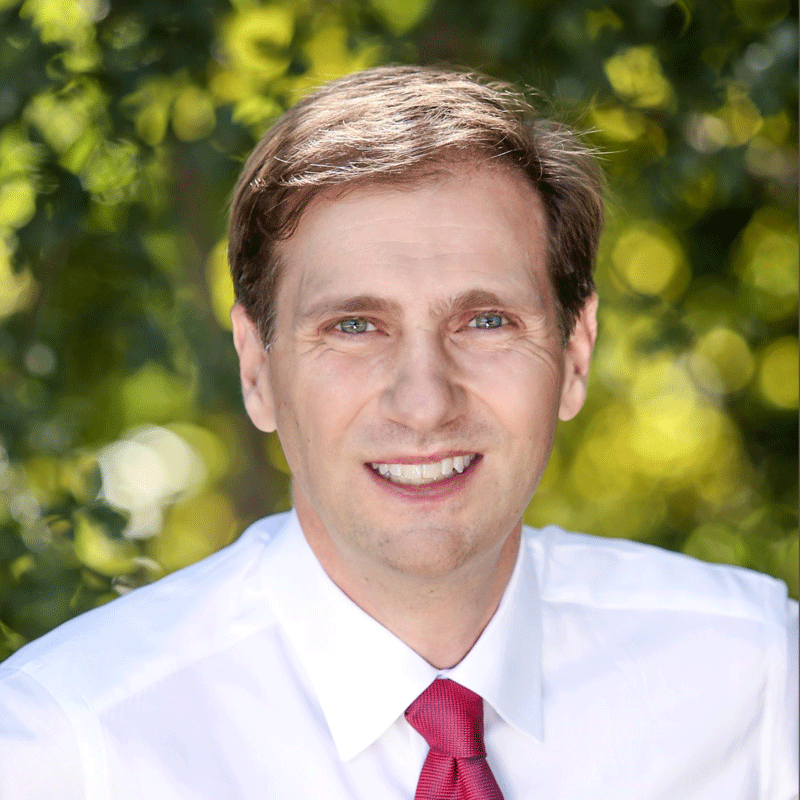
Justin Nelson of Susman Godfrey, currently lead counsel for plaintiffs in a precedent-setting AI copyright class action against Claude AI maker Anthropic in the U.S. (which they have agreed to settle for $1.5 billion and are awaiting final approval: September 25, 2025 ai fray article), has a significant track record in IP litigation. Some of his biggest successes include helping Dominion Voting Systems strike a $787.5 million settlement with Fox, Green Mountain win a $64.5 million judgment against Ardagh (included on National Law Journal’s Top 100 Verdicts of the Year list) and Fractus gain a $38 million judgment (a case that later settled on appeal).
In the patent litigation space, he also represents Fractus in an IoT-related patent infringement suit against Geotab and Verizon (December 16, 2024 ip fray article), non-practising entity Advanced Memory Technologies LLC in a suit against South Korea’s SK Hynix over the alleged infringement of semiconductor memory module patents (January 10, 2025 ip fray article), and ParTec in an AI-related patent infringement suit against Microsoft (April 17, 2025 ip fray article).
Mr. Nelson sat down with ip fray to have a thorough discussion about his career to date – in both copyright and patent litigation – the technical cross-over between copyright and patent cases, and the Unified Patent Court’s growing role in cross-border disputes.
Interview
ip fray: You are one of the very few lawyers who have both clerked for the United States Supreme Court (SCOTUS) and also served as lead trial counsel in a verdict of over $50 million. Do you know how many lawyers have both clerked for the SCOTUS and also scored billion-dollar settlements, and if so, could you please share that number? How does it feel to be part of such an exclusive club?
Justin Nelson: I am not sure that there is anyone else. The only one that comes to mind is the founder of my firm, Steve Susman. One of the strengths of our firm is the trial advocacy and depth of knowledge in briefing and appellate process. Why I came to Susman Godfrey at a very young age was because of the great experience you get: I was only a young partner when I first became Litigator of the Week for the American Lawyer (when the court granted our request for an examiner in the 6+ billion dollar Washington Mutual bankruptcy).
Being able to be part of high-profile, high-stakes litigation, understanding what it takes to win– a combination of excellent lawyering and keeping credibility, knowing what your best arguments are and being focused: those are things Susman Godfrey and Steve taught me.
If it’s just us being part of it, then I am proud to be part of that club (although I am sure there are a few others that would qualify too).
ip fray: Why are there so few Supreme Court clerks in litigation, do you think?
Justin Nelson: Many go into academia, many are judges, and many are appellate lawyers who focus on the craft of brief writing itself and appellate advocacy, which is a truly different skill. However, there are roughly 12 Supreme Court clerks at Susman Godfrey – all of us do primarily trial advocacy and trial work although we also can and do appellate work as well. This creates a huge distinction for our firm over other firms, as it gives us proper depth in knowledge. Every lawyer that starts at our firm has a federal clerkship. We empower associates to get the experience: we are a trial firm, not a settlement firm.
ip fray: In the Dominion Voting Systems v. Fox, a Delaware judge once said to you: “This is the best lawyering I’ve had, ever.” Meanwhile, in the early stages of the Anthropic litigation, after you gave notoriously difficult-to-please Judge William Alsup in San Francisco an outline of your case, he gave you an A+. How much does this praise from the judges mean to you in comparison with what ten or twenty awards would, for example?
Justin Nelson: It’s always nice to receive praise from judges that you’re litigating in front of, but it’s not something you control or seek out. What I try to do is do my best work consistently. There may be cases where judges have different opinions or cases that lead to different results.
You cannot control a result – what you can control is effort. And that is what I try to do.
ip fray: Your first verdict of $50M or more was a patent case, right? Could you tell us more about that case and what that win meant to you at the time?
Justin Nelson: Yes, this was a patent case about using recycled glass (cullet): Green Mountain Glass v. Saint Gobain (April 24, 2017 Susman Godfrey press release). You can take mixed colored cullet and make a single colored bottle, which is a huge win for the environment as you can use glass itself as the raw material instead of making it from scratch. The court awarded Green Mountain $64.5 million in damages, and that was later affirmed by the Federal Circuit. I was proud to get that result for our client. It was a neat, fun, and important case.
ip fray: Some refer to copyright as part of “soft IP” and patents as “hard IP” because patents are issued only after a substantive examination process. Given you litigate both, how would you describe the difference in the challenges you have to overcome to successfully enforce each of those types of rights?
Justin Nelson: They both fall within the umbrella of IP, but they are quite different.
In patent cases, as the saying goes, “there is one way to win but over a thousand to lose”, so much of it is trying to figure out at the very beginning the importance of the invention: what the infringement read is, whether it is valid and whether you can overcome the enforceability challenges. In many of these cases, we are betting on ourselves, and we want to make sure that the case is one we can stand behind.
There is certainly a test on whether something is copyrightable. But for most books or articles, it’s not a question of whether it is copyrightable – it’s about the use: was there any, and is it fair? Many copyright cases are actual damages cases, but many have a statutory damages component as well, like the Anthropic case. There have been several authors of books who don’t have registered copyrights. And the unfortunate reality is that from the beginning, books without a registered copyright were not part of our class due to the potential power of statutory damages. Our case cannot solve all of society’s problems. But we can use the law as best as we can to achieve the right result. The ability to obtain statutory damages is a huge part of having a copyright. And if you are a copyright owner, I encourage you to register your copyright.
ip fray: Can AI copyright litigation get almost as technical as patent litigation when there are such questions on the agenda as how large language models are trained and how they generate their output? How?
Justin Nelson: Absolutely, it’s very technical – I have now given two technology tutorials to courts – one in the Anthropic case and one in OpenAI/Microsoft MDL. There is a technology component, especially with AI training.
ip fray: You’ve had major successes against large companies. Even though Anthropic is young, its market capitalization is in the hundreds of billions of dollars, and Amazon and Google are major backers. Some members of the IP community, especially in the U.S., consider large tech companies to be unrepentant infringers. In your experience, are they all extremely difficult, or are there major differences, without necessarily naming anyone, in terms of preparedness to settle?
Justin Nelson: From my perspective, all cases are prepared in the same way and I expect them to go to trial.
ip fray: What do you think of the role that Europe’s Unified Patent Court (UPC) now plays in cross-jurisdictional disputes?
Justin Nelson: It’s a role that exists and could potentially grow. In some cases that I am involved in, there is a role for the UPC to play in that European and U.S. patent rights do overlap, but they also have differences. Many disputes are cross-border disputes. We will continue to see a role for the UPC, especially where there is a strong European component.
ip fray: Are you a typical plaintiff’s lawyer in the fields of law in which you practice (as it looks like your major successes are on that side), or have you also played defense?
Justin Nelson: I do defend, but it depends on the case. For example, I am currently representing a media company in a defamation-related action. It makes us sharper as a firm and as lawyers to be able to litigate both sides of the docket.
ip fray: Many of your copyright cases are class actions (although you represent several non-class plaintiffs too). What clients do you prefer as a patent litigator: licensing firms because they can’t be countersued, current operating companies, former operating companies, or is it just about the patents and the story behind them?
Justin Nelson: Each case is unique and has its own story to tell. Part of our job as lawyers is to really try to figure out that story. For many of the cases, even in the area of copyright class action, it’s really important to tell the story about the plaintiffs and what happened.
It was especially pleasurable to work with the three named plaintiffs in the copyright action against Anthropic. The work and support we got from Andrea Bartz, Charles Graeber, and Kirk Wallace Johnson was invaluable. We were thrilled to work with them on this.
The same, of course, is true in the patent context – whether that is for non-practising entities or not. Jurors and judges really try to get to the right answer, and you want to give them the whole context for that.
ip fray: And finally, why have you chosen Houston as your base (when most other litigators in your league are based on the East Coast or the West Coast of the U.S.)?
Justin Nelson: My office is in Houston and I live in Austin. My cases are all over the country though – from Texas, to New York, to Delaware, California, and elsewhere. So when hearings come up on one coast or another, it’s actually more convenient to be based in the middle (saves me cross-country trips).
Many of our cases come from word-of-mouth and reputation. At heart, we’re a Texas trial firm. That still keeps us going.