
French in vitro diagnostics company bioMérieux manufactures reagents, instruments, software, and services for clinical diagnosis of infectious diseases, cardiovascular emergencies, and for use in industrial microbiology (food and pharmaceuticals).
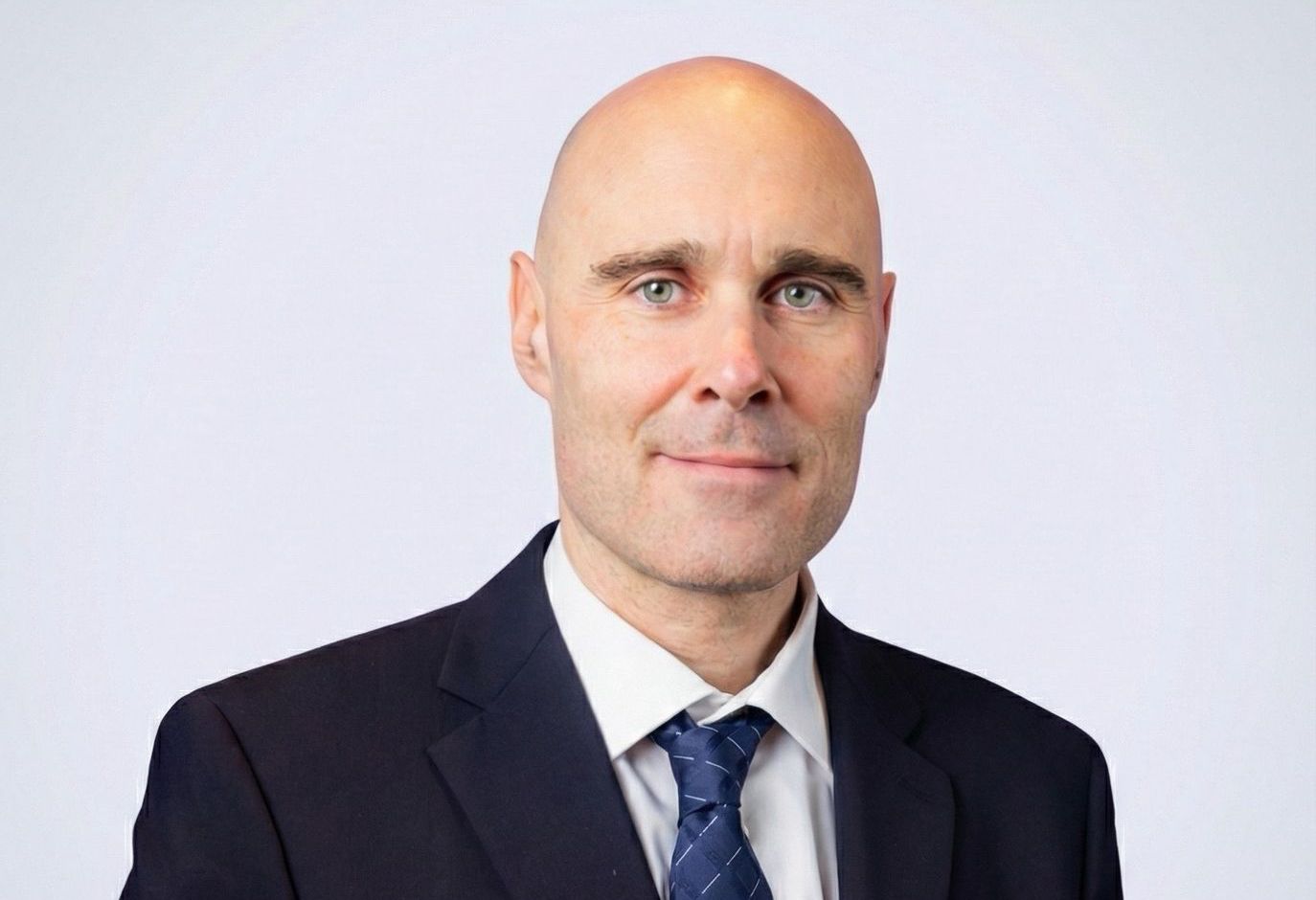
Heading up bioMérieux’s global IP department is Dr. James Robertson, who first took up the role in December 2020. He recently sat down with ip fray for an exclusive interview, covering the vision on which he set out when first taking up his role, bioMérieux’s activities in the Unified Patent Court (UPC), and the hurdles he has had to overcome since starting working in diagnostics IP.
Disclaimer: The opinions expressed in the interview are his own personal opinions and not necessarily the opinions of bioMérieux.
While Dr. Robertson was impressed by the quality of the IP department in 2021, he set out a clear vision for the department that consisted of four pillars:
- Ensuring the department is recognized as a valuable business partner to internal stakeholders
- Strengthening collaboration between U.S. and European patent attorneys to ensure that the patent team incorporates both perspectives
- Reducing some of the barriers that were impeding the prioritization of high-value work
- Maximizing the department’s overall contribution through greater cost efficiency
While acknowledging there is always room for improvement, he believes his department has largely achieved those goals. As well as significantly reducing costs by in-sourcing activities, the U.S. and European patent teams have begun working more closely on due diligence and patent prosecution, allowing the company to benefit from combined expertise. And, he notes, bioMérieux’s IP department has really begun to prove it is a “valuable business partner”:
“We are making sure we deliver what we need, including by rolling out a training program on how to identify patentable subject matter to a large proportion of the R&D department.”
Dr. Robertson also reveals some of the biggest hurdles he has had to overcome in his IP career:
- Shifting the culture around IP: When he first joined bioMérieux, Dr. Robertson observed that whilst the importance of IP was known by senior management, he recognized that IP was not consistently valued across the business, as he had experienced in the pharmaceutical industry. He has deliberately tried to build understanding and to embed the importance of IP across the organization.
- Slow pace of change: While he acknowledges he is not “famed for [his] patience”, Dr. Robertson notes that the changes he has helped the company achieve took longer to implement than he had envisioned.
- Moving countries/roles in the middle of the pandemic: He was the only non-French person based in France in his team when he started in the middle of the pandemic, when people were largely working remotely, there were curfews, and when no one appeared to know the pandemic rules for crossing borders between France and Belgium (where he had been living at the end of his previous role). But, he emphasizes, his team was “exceptionally welcoming” and made the transition easier.
During Kisaco’s Patent Litigation Europe Summit in Amsterdam in January, Dr. Robertson spoke on a panel in which participants observed that pharma companies are reluctant to enforce their patents in the UPC (January 21, 2026 ip fray article). So far, bioMérieux has not asserted any of its patents in the UPC either, although it has acted as a defendant in several cases (filing counterclaims for revocation in all of those). Below is a table breaking down those cases:
| Case number | Title | Patent-in-suit | Type | Status |
| UPC_CFI_181/2025 | Qiagen vs. bioMérieux | EP2726883 | Infringement | Written phase |
| UPC_CFI_516/2025 | bioMérieux vs. Qiagen | EP2726883 | Revocation (counter) | Written phase |
| UPC_CFI_497/2024 | bioMérieux UK vs. Labrador D. | EP3756767 | Revocation | Oral phase |
| UPC_CFI_571/2024 | bioMérieux & subs vs. Labrador D. | EP3756767 | Revocation (counter) | Oral/written phases |
However, Dr. Robertson says he doesn’t have any “huge reservations” about enforcing at the UPC. Historically, the company has not asserted many patents – but if bioMérieux had the right IP and the right case, he personally would have little reservation in using the court.
“The decisions seem well-reasoned, the judges competent, and the speed and threat of broad injunctions as a patentee are real incentives to use the UPC,” he explains.
Big wins
Dr. Robertson highlights the fact that his role as a European patent attorney has allowed him to work for different companies, in different countries, and experience different cultures.
After completing a PhD in molecular biology and immunology at the University of Edinburgh, and working as a postdoctoral Research Associate at Imperial College London, Dr. Robertson joined GlaxoSmithKline as a trainee patent attorney in March 2006, where he qualified as a European and Chartered Patent Attorney. Since he was already supporting the Belgium-based vaccines business, he moved there in 2011.
Four years later, he moved to Copenhagen to join LEO Pharma as Head of Global Patents, and finally navigated a complex Denmark/Belgium/France transition during the pandemic to join bioMérieux as Global Head of IP five years later. Between January 2012 and January 2025, Mr. Robertson was also a member of the EQE Examination Committee II at the European Patent Office (EPO).
But some of his other career highlights include a litigation he led – a notable win that arose when GSK was sued by a competitor in Germany, after which GSK counterclaimed at the German Federal Patent Court, after which the infringement was stayed and the patent revoked. “That was definitely a highlight – I really enjoyed doing oppositions at GSK,” he comments.
At bioMérieux, another important win came when the company faced national infringement proceedings in both Germany and France, brought by non-practising entity (NPE) Labrador Diagnostics (a subsidiary of Fortress Investment Group). bioMérieux intervened with a pending Opposition Appeal at the EPO and succeeded in revoking the asserted European patent, which brought the national proceedings to an end.
Even more recently, at the UPC, the Düsseldorf Local Division (LD) dismissed Labrador Diagnostics’ infringement action against bioMérieux, holding that no infringement can be found once the patent claims are amended in a parallel bifurcated validity proceeding and the accused products fall outside those amended claims (January 28, 2026 ip fray UPC Round-Up). The asserted patent had been previously upheld by the Milan Central Division in amended form.
Dr. Robertson doesn’t have a typical day, but it commonly involves working with stakeholders within the legal and corporate entity to implement cross-functional initiatives. He also ensures that his direct reports are provided with the support they need and are given guidance whenever necessary. Dr. Robertson’s leadership style was largely shaped by his time in Denmark (where he was trusted with his first leadership role), which he describes as “democratic”:
“I want to hear what people have to say. I want them to participate, speak freely, and give their opinions. I am of the belief that I certainly don’t know everything and can learn from others – and above all, I value honesty and transparency. I believe I afford that to my team.”
Elevating the importance of IP
Looking ahead, Dr. Robertson is keen to keep bringing success in the company’s litigation activities, which he believes is crucial to show that the company can defend itself and doesn’t infringe valid third-party rights.
“I would also like to use the opportunity of litigation to elevate the importance of IP, what we could achieve with our own IP, and the idea of how important it is to prevent litigation and the threat of injunctions,” he emphasizes.
Until recently, the company hadn’t fully appreciated how, as a European manufacturer, bioMérieux could be significantly affected by injunctions. “So I am putting that on the radar for our department this year,” he says.
On a more personal level, Dr. Robertson says he is happy to be part of the diagnostics world, which plays a huge role in public health – proven by the pandemic. In the following years, he would like to broaden his legal expertise beyond IP by getting a legal qualification. He notes that many patent attorneys are keen to broaden their knowledge to add even greater value to their company.