
Sandoz had a busy 2025, including settling with Regeneron, invalidating AstraZeneca’s patent in a UK patent infringement case, and acquiring Just-Evotec Biologics EU, which included a license to Evotec’s continuous manufacturing platform technology. Perhaps one of its biggest wins was its series of litigations against Bayer across Europe over its drug Xarelto (rivaroxaban). While the company had a lot of headwinds in the first instance courts, it has subsequently been able to get Bayer’s patent overturned at every major appellate court (including Germany and the Netherlands, which is still pending).
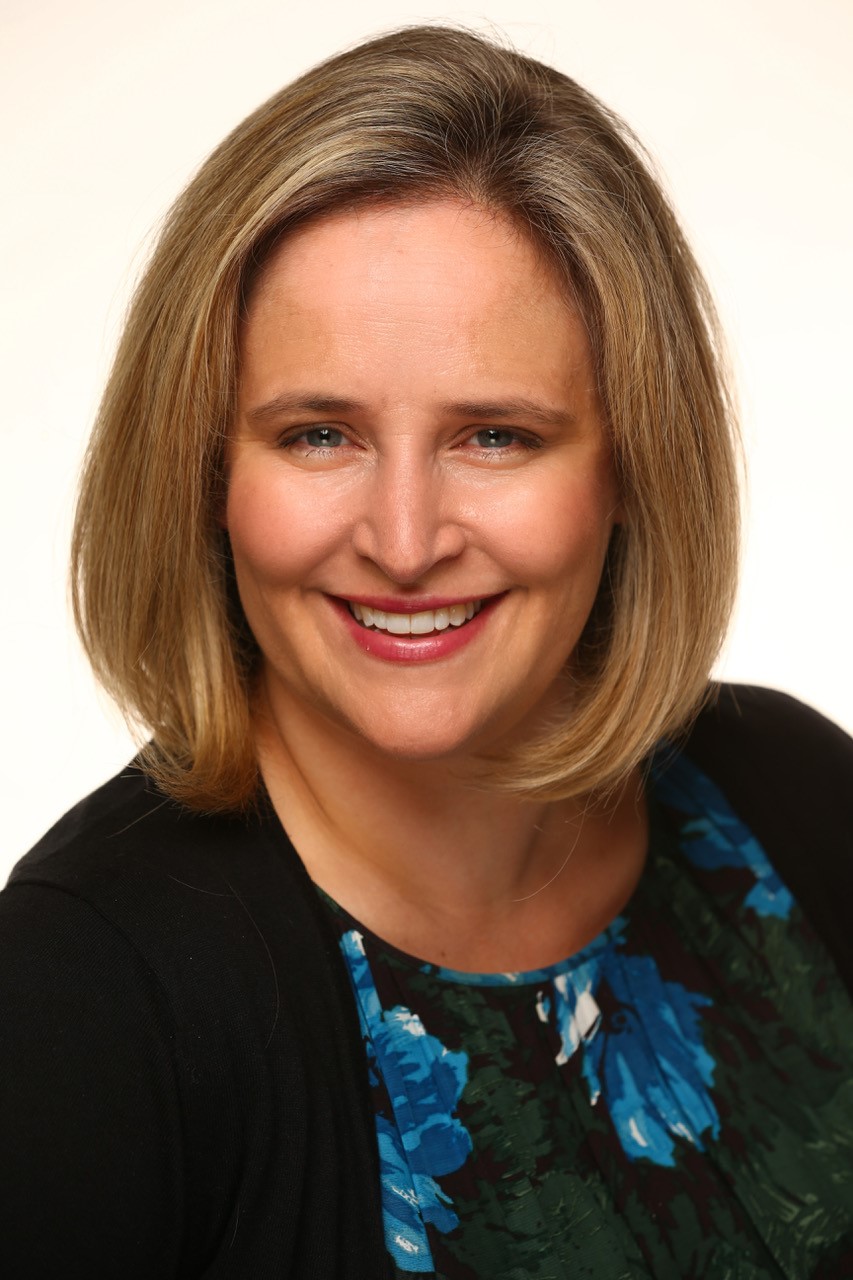
At the helm of the company’s Global IP department is Julia Pike, who was first appointed in February 2020. Last month, on the sidelines of Kisaco’s Patent Litigation Europe Summit in Amsterdam, she sat down with ip fray to conduct an exclusive interview discussing the “tricky” business of cross-border injunctions, the fundamental differences between tech and pharma patent enforcement, and what will be keeping her department busy in 2026.
Ms. Pike has no “typical day”, but they mainly consist of helping other people – being a “sounding board” for other people’s ideas and approaches, and sometimes stepping in to help during the occasional crisis.
However, she is often involved in high-profile litigation cases, and will go along if it means being able to problem-solve on the spot rather than coordinate across time zones.
In fact, Ms. Pike was part of the first wave of biosimilar litigation in the U.S.: the fight between Amgen and Sandoz. That case, she notes, dictated how the Biological Product Innovation and Competition in the U.S. was going to be interpreted for future cases.
Another major highlight she recounts is the advocacy work she has done in Europe. She was part of one of the early reports about patent barriers to entry (May 2008, Patent-related Barriers to Market Entry for Generic Medicines in the European Union report), which contributed to the instigation of an EU Commission full-sector inquiry into the pharmaceutical industry (European Commission Pharmaceutical sector inquiry).
Ms. Pike has held a variety of roles throughout her career. Prior to joining Sandoz (initially as European Public Affairs Director in May 2009), she was a subcontract manager for Tranfield-Obayashii Joint Venture from 1997 to 1999, a lawyer at Corrs Chambers Westgarth between 2000 and 2002, IP director at Mayne Pharma from 2003 to 2007, and IP director at Hospira for the following two years.
Shortly after she was chosen to head up Sandoz’s Global IP department, the company was in the process of separating itself from Novartis (October 4, 2023 Novartis press release). And one of the key tasks she took on was broadening the IP unit’s horizons.
Within Novartis, a bigger originator brand company, Sandoz was limited in what it could do in terms of undertaking novel IP strategies and engaging in lobbying and advocacy in IP. This was a big part of why she took on the job, she notes.
Advocacy is long-term, and legislation can take decades from the kick-off to life, but Ms. Pike notes that she is happy with what she has been able to accomplish while at Sandoz.
“In particular, the European Patent Office (EPO) has been a really open and engaged partner with some of the issues we want to raise with them – we’ve had good discussions, and we look forward to more,” she says.
Cross-border injunctions “have their place”
Her time at Sandoz has been far from straightforward wins, though. Last year, it also suffered a couple of minor blows, including a preliminary injunction (PI) in Germany against its subsidiary Hexal for the alleged infringement of EP2364691 with its Eylea biosimilar.
Ms. Pike notes that the company has appealed that decision and is hopeful that it succeeds so it can bring its product back to the market as soon as possible:
“We’d already launched at the time that Regeneron and Bayer asked for a PI and they had been aware of the product and exactly what it looked like since at least January 2025. From our perspective, seeking a PI after we’d launched, two weeks before Christmas, is not an ideal way to resolve patent issues. The timing of that case was very much in Regenoron’s hands. We were very surprised to see that action come in shortly before the year-end break.”
Cross-border injunctions and their place in pharmaceutical patent enforcement were among the key points of discussion during the Patent Litigation Europe Summit last week.
Ms. Pike believes there is a place for cross-border injunctions – but in the Aflibercept (Regeneron v. Advanz) case, where there is “a lot of nuance” about what the patent-in-suit can protect, so she says it’s a “big ask” for one country to take that decision itself on behalf of all those other countries. “Especially since we have clearly seen in Regeneron v. Advanz that they may decide differently,” she adds.
In that case, the German court took its approach to issuing a pan-European injunction because it said infringement is a common legal question in all jurisdictions. And that all jurisdictions will make the same decision because we’re all bound by the same patent convention (January 9, 2026 ip fray article).
But in this case, several jurisdictions (putting aside the UK), including the Netherlands and Belgium, had made different decisions about what this patent protects. So, a pan-European injunction on the basis of the doctrine of equivalents is “particularly tricky”, she says.
Another major issue that Ms. Pike has recently come face-to-face with is communicating the economics and logistics of pursuing patent litigation to a non-expert audience. Because, she notes, often those with the real negotiation powers, and the ones who are having to ultimately pay in pharmaceutical patent cases, are the ones who are not present at the table – and who do not have any understanding of the technical aspects of patents.
In a case in which AstraZeneca was enforcing its patent against Sandoz over its diabetes drug dapagliflozin (Forxiga), for example, generic companies won in the first instance, but then the UK England & Wales Court of Appeal (EWCA) enjoined all parties from launching until the appeal decision 93 days later.
“Objectively, it doesn’t seem like a long time, but those 93 days cost the UK’s National Health System (NHS) over £100 million,” Ms. Pike notes. For her, that is one of the biggest challenges in life sciences litigation. The party that has the most to gain from Sandoz’s win is not Sandoz: it’s the third-party that is not present and currently has no role in any patent dispute, she believes.
This makes the economics at play when making decisions on whether to litigate very difficult, she adds, emphasizing that this is a key difference between how technology companies and life sciences companies talk about their respective patents:
“It’s the same tool, but it fits in a very different niche.”
Sandoz-EPO data program
What does Ms. Pike want for her future? “I’ve never ever had a plan,” she laughs. “Every career is as much luck as it is hard work.”
For now, though, she wants to follow through with the work Sandoz has started regarding advocacy. “I want to see it done,” she says.
In 2026, a major focus for Sandoz’s IP unit will be a new European Patent Office (EPO) data program it has recently invested in. The program consists of a database of all the patents that have ever gone through an EPO Board of Appeal (BoA) decision, their outcomes, how long they spent in prosecution, and the EPO’s granting and divisional practices.
Why?
“Because Europe is Europe – there are so many courts you have to be involved with, and if you can make sure that the grant and examination process is right at that central court, the rest of it takes care of itself,” Ms. Pike says.
She notes that the EPO is the world’s leading patent office, and making sure it has the right processes and resources in place, as well as making the right decisions, is “transformative” for everywhere else.
“If everyone has the confidence that the patents being granted by the EPO are good, are in their right scope, and will survive a national attack, that makes everyone’s lives much better.”