
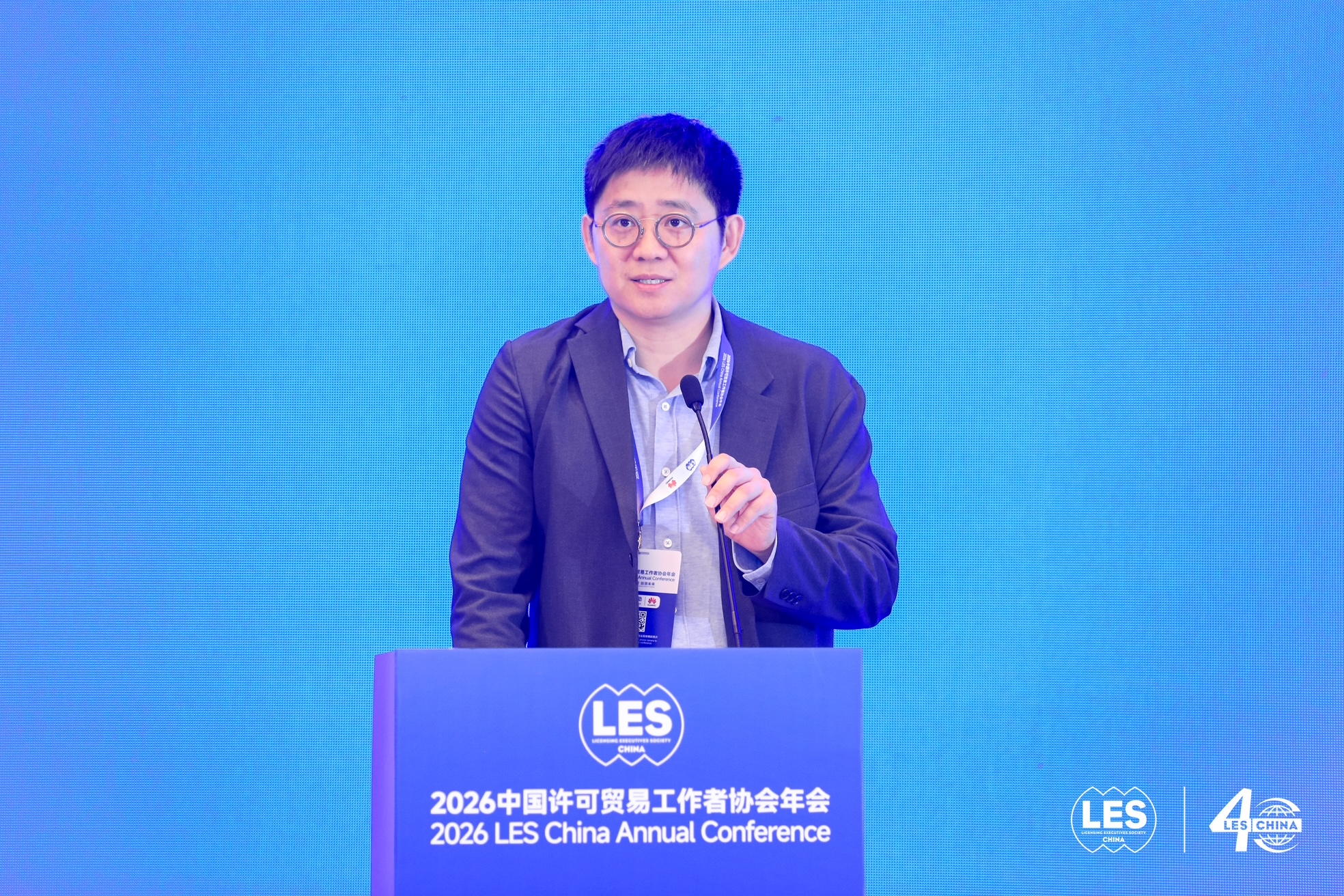
Cheng Yu, patent licensing director at Xiaomi and the chair of the IP Valuation Committee at LES China, who has helped the company seal several strategic high-value deals, tells ip fray in an exclusive interview how he personally characterizes the conduct of good-faith licensors seeking royalties, weighs whether to sign a deal or risk litigation, and the advantages of mediation and more open communication with the global IP community.
Why deals sometimes get done – and sometimes not?
“A deal is a two-way street, which hinges on both parties’ perceptions of portfolio value, their capabilities, and – critically – their willingness to listen,” according to Xiaomi’s Cheng Yu.
For Xiaomi, deals are often likely to conclude when the offer from the other party falls within the company’s perceived FRAND range. However, when negotiations get stuck, litigation sometimes becomes unavoidable.
“And sometimes, litigation or injunction threats are used by some as leverage to pressure product and service companies into accepting unreasonable terms,” he says, adding, “when faced with an unFRAND demand backed by litigation threats, Xiaomi’s legal team fights back professionally and vigorously – and has built a strong track record in litigation (October 3, 2024 ip fray article and July 14, 2026 ip fray article and July 30, 2026 ip fray article).”
Mr. Yu continues:
“Let me be clear: we don’t deny the fact that an injunction imposes pressure. But we are not afraid of litigation, and we will not cave in simply because of litigation pressure. We will fight back hard against ‘unFRAND’ demands.”
While Xiaomi’s licensing team will always strive to be “reasonable and professional” in licensing negotiations, when the other party turns it into “blackmail”, it will respond accordingly. “We have had several instances where patent holders approached us with unreasonable and unjustifiable demands, but walked away worse off,” he adds.
Mr. Yu also notes how ip fray once commented, “it appears that Xiaomi’s legal team (in-house and outside counsel) is in a strong position to predict outcomes when determining against what cases to defend vigorously (and when to settle)” (July 30, 2026 ip fray article) – and that ”predictive” strength “is not a matter of instinct”.
The team’s view of patents is grounded in detailed technical and patent analysis. It looks “closely” at what a patent actually covers, how strong its claims truly are, and what it is realistically worth. And it is through this that Xiaomi strives to help keep outcomes across the licensing community “reasonable and predictable for everyone”.
Despite its strong litigation track, the majority of Xiaomi’s patent licensing agreements are reached without litigation.
This rate of litigation-free deals comes down to three main factors, Mr. Yu says:
- Respect for IP and a balanced stance: as both a major patent holder and a leading implementer, Xiaomi occupies a unique neutral position in the licensing ecosystem. In practice, this means Xiaomi always prioritizes amicable negotiation as the preferred path to resolution. Litigation is a last resort. The company is open to other means for dealmaking and actively explores all alternative mechanisms, including mediation, consortium deals, and patent pool arrangements.
- Open-mindedness, flexibility, and creativity: a notable example is the four-party licensing deal it successfully structured with Orange, IP Bridge, and Siemens in January 2023, among other confidential deals.
- Exploring the true value of the portfolio with substantial evaluation and meaningful discussions: Xiaomi follows the industrial practice of technical evaluation from the perspective of both patentability and reading on the standard and commercial discussion, where a meaningful commercial discussion is based on the technical evaluation and discussion. The company shares its professional technical evaluation results with the counterparts, and through the technical discussion, both parties have the opportunity to rectify their previous perceptions of the value; the gap can be narrowed, and consequently, good progress on the commercial discussion can be made.
What is good faith?
Xiaomi characterizes any conduct or move that “genuinely” facilitates understanding the portfolio value, demonstrates a willingness to listen to the other party, and reflects a willingness to adapt based on the other party’s feedback as good-faith conduct. This characterization applies equally to both licensors and licensees, Mr. Yu says.
But, generally, he says, it is more “instructive” to outline several (non-exclusive) categories of conduct that impede a deal from the perspective of licensing negotiations:
- Constantly threatening litigation during negotiations: using legal action as a persistent pressure tactic rather than a genuine dispute-resolution mechanism.
- Litigating before first contact or at the very early stage of negotiations: filing suit before any meaningful exchange has occurred, signaling an intent to coerce rather than negotiate.
- Refusing to engage in technical discussions, or merely going through the motions: treating technical engagement as a formality rather than a substantive step toward showing the portfolio value.
- Providing only minor, limited claim charts for cherry-picked patents: offering insufficient evidence to meaningfully represent the portfolio’s overall value. This typically occurs when a portfolio has been divested from a larger parent portfolio and that divested part may consist of a very limited number of good patents and a large portion of lower-quality “filler” patents to inflate its apparent portfolio size. That said, a divested portfolio may in some cases hold fair value, which can be reflected in the transaction price of the divestment — particularly where the divesting party is a sophisticated market player who won’t sell good patents cheaply.
- Failing to explain the basis for the value proposition or offer: presenting a royalty demand without transparent and solid justification, according to common industry practice.
- Refusing to listen to the other party’s arguments or comments
- Lacking flexibility and creativity, and ignoring the concerns and obstacles of the other party in licensing negotiations: rigidity is a significant impediment to bridging the gap between the parties. It deserves mention because, in practice, the absence of a creative problem-solving mindset can be just as obstructive as outright bad faith.
Mediation and bridging SEP ecosystem gaps
More and more alternative dispute resolution (ADR) tools are becoming available to companies engaged in global SEP litigation, including the Patent Mediation and Arbitration Centre (PMAC, the director of which we interviewed earlier this month: October 7, 2026 ip fray article) and the World Intellectual Property Organization’s Arbitration and Mediation Center (the head of which we also interviewed last month: September 4, 2026 ip fray article).
Xiaomi has not yet publicly engaged in these pathways, but Mr. Yu emphasizes the “meaningful value” mediation can add to licensing negotiations. That value, however, depends on three prerequisites: genuine willingness from both parties, a competent mediator – particularly one with the industry experience and commercial judgment – and a well-structured mediation framework. Once those are met, mediation can offer three advantages, he notes:
- Breaking binary deadlocks: mediation introduces a neutral third-party input that can break impasses where the parties are entrenched in opposing positions.
- An independent source of insight: an experienced mediator can educate both sides, prompting each to reassess their own positions with a fresh perspective. The insight from the mediator can also be used as evidence for internal persuasion. The mediator should be professional (better to have direct hands-on experience in SEP licensing) and earn the trust of both sides.
- Advancing negotiations, even without a guaranteed settlement: mediation does not guarantee resolution, but even when it falls short of a deal, it often narrows the gap and creates good momentum toward a settlement.
As well as participating more and more in interviews, Xiaomi has deliberately increased its engagement with the IP community by attending conferences in recent years to raise the obstacles and concerns it observes, share good practices from a product company’s perspective, increase understanding and eliminate misinterpretation, stay ahead of trends, build relationships (personal and professional), and enable efficient access to multiple stakeholders.
The team has also started writing more actively for publications, as a way to both communicate and invite other companies to understand and engage in dialogue with Xiaomi. Mr. Yu is now leading and coordinating these efforts for Xiaomi’s licensing team.
Mr. Yu adds that he has actively encouraged fellow Chinese implementers to become more open:
“While historically patent holders have done well in this aspect, implementers should be doing the same.”