
Dutch technology giant Philips has long been a major standard-essential patent (SEP) player. This year, the company has had another decisively busy year in this space, including the striking of deals with Chinese mobile manufacturers Transsion (July 16, 2025 ip fray article) and vivo (April 15, 2025 ip fray article) following litigation, as well as a landmark win in a DVD SEP infringement case in the Delhi High Court (February 24, 2025 ip fray article). The company’s most recent victory came from the Unified Patent Court’s (UPC) Court of Appeal (CoA), which earlier this month affirmed the court’s first-ever SEP injunction on appeal against Belkin (October 3, 2025 ip fray article).
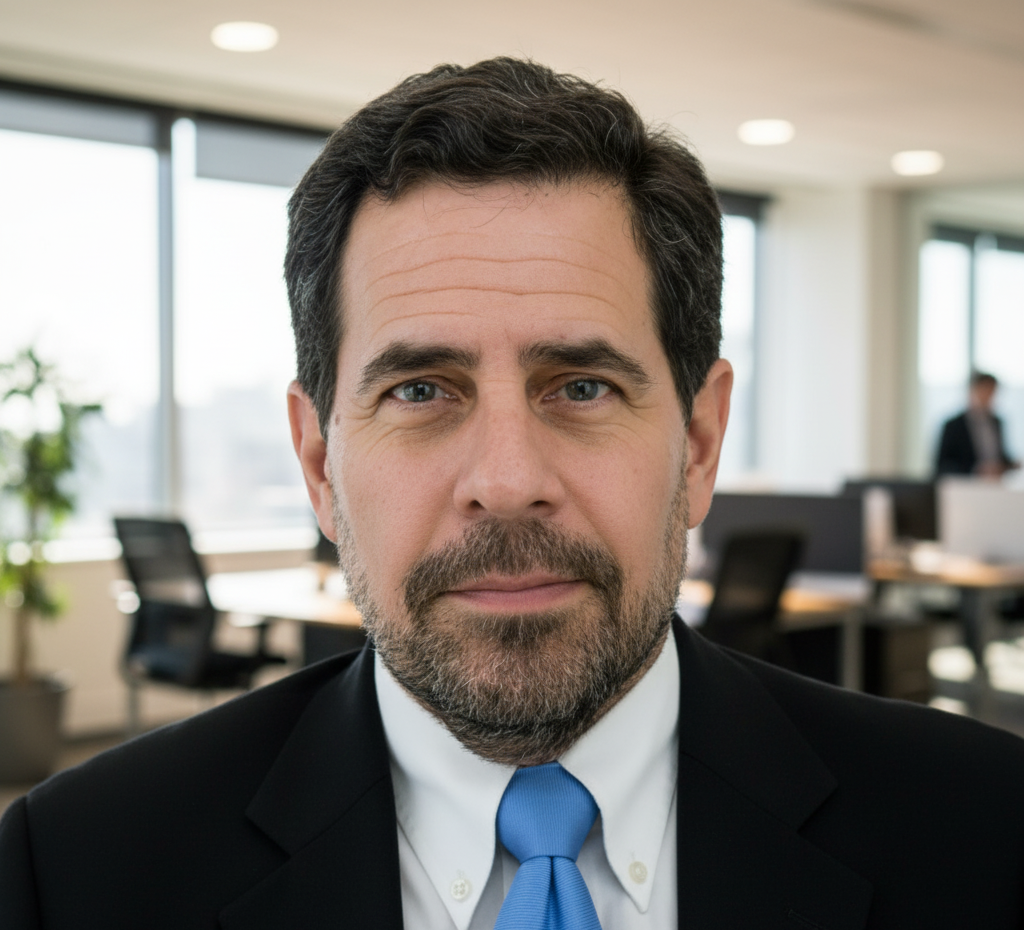
“But Philips’s underlying principles, which have acted like a compass for the company with regard to IP, have not changed in the past couple of decades,” John Sideris, Principal Licensing Counsel at Philips, told ip fray in an interview following the Via Licensing Bridge Summit in San Francisco last month (August 29, 2025 ip fray article). Among other topics, Mr. Sideris opened up to ip fray about his global career in patent licensing (spanning a U.S. company, Japanese company, French company and now Dutch company), his involvement in Philips’ licensing deals with Transsion and vivo, and the future of IP licensing at the company.
Experience is ‘value’ in world of law
On a day-to-day basis, Mr. Sideris manages Philips’ participation in multiple patent pools, and simultaneously oversees several bilateral licensing negotiations. He also does a lot of advocacy work – for example, he notes, he and his colleagues helped Philips speak out about the proposed – and now scrapped – EU regulation on SEPs (July 31, 2025 ip fray article). The company has also provided input to the UK Intellectual Property Office, which has proposed a set of SEP licensing measures, including a possible rate-setting procedure (July 15, 2025 ip fray article).
Prior to joining Philips in October 2007, Mr. Sideris was the director of patent and legal evaluation at Alcatel for nine years, and IP Counsel at Hitachi (America) from 1994 to 1998. However, his career started out in electrical engineering at Hewlett-Packard, before he pivoted to law, retrained and worked for a couple of law firms in New York.
Reflecting on the career transition, he says keeping up with technology as an engineer was a constant “treadmill” – and eventually, he felt that as engineers age, they become “obsolete”. Meanwhile, in law, the more experienced you are and the “more gray hair you get”, the more valuable you are, he believes.
While he trained as a U.S. lawyer, Mr. Sideris’s time at a Japanese company, a French company, and now a Dutch company has provided him with a rich, global perspective on IP issues, he notes.
Why has he stayed so long at Philips? “The people, and the responsibility entrusted in me,” he says. But the people above all, he emphasizes.
While he works with a team of subject matter experts who do technical support for him, Mr. Sideris does not manage his own team per se. He reports directly to Philips’s Head of IP Licensing, Jako Eleveld, whom he describes as being the epitome of a “successful leader”. According to Mr. Sideris, successful leadership includes:
- Leading by example: getting involved, travelling, working hard, and not just sitting back and giving orders.
- Getting involved in the details: gives a lot of authority to negotiate, but also knows all the details of what is going on at all times.
- Allocating responsibly: the responsibilities he delegates are interesting and challenging.
- Being human: people want to work for him – in every company, you hear some grumbling of an upper manager, but this is never the case with Mr. Eleveld.
Patent pool work
Mr Sideris, who has been going to pool meetings as far back as 2002 (including those hosted by Access Advance), praises Via LA’s Bridge Summit for the way it combines pool meetings with dynamic conference panels and social events (October 9, 2025 ip fray article):
“Yes, 90% of it is the business part of it, but then there is also the social collegiality benefit to it – there are people you admire, who are experienced in IP matters, and it’s good to see them from time to time to exchange ideas. They are of the same spirit in that they are travelling a lot, and they are all open and experienced internationally regarding IP.”
When he took on his post in 2007, Mr. Sideris’ main goals included working on interesting, challenging products, getting involved in some M&A work, and becoming a real expert in patent pool work.
“And the last one is something I can say I have achieved,” he says, smiling.
In fact, becoming a pool negotiation connoisseur is one of the Licensing Principal’s three biggest career highlights:
- Patent pools: Mr. Sideris started working with pools in 1999, a couple of years after the first-ever patent pool program launched. Today, he now boasts skills that span every possible need for a successful patent pool, from writing the contracts that form pools to getting antitrust approval, from overseeing the portfolio of a patent owner in a pool to getting claim charts to an evaluator, and from negotiating with those licensees that are hesitant to take a pool license. He has worked with every significant licensing agent (Via LA, Access Advance, Sisvel, Avanci) and has been involved in many of their formations.
- Large bilateral licenses: Mr. Sideris has helped many companies bring in tens of millions in bilateral patent licensing deals, including with Samsung, Xiaomi, Apple, OPPO, LG Electronics, and TCL. His most recent deals for Philips were with Transsion, following its Advanced Audio Coding litigation in the Delhi High Court, and TCL, following video codec patent infringement litigation in the State of Rio de Janeiro Judiciary, Court of Justice in Brazil. Both recently transitioned from bilateral to purchasing a pool license, Mr. Sideris reveals. While he was not involved in the deal, he notes that Philips’s settlement with Thales/Telit (August 23, 2024 ip fray article) was another major win for the company following a long hold-out period.
- M&A work: Mr. Sideris oversaw several IP due diligences when Alcatel and Philips acquired companies – “looking under the hood”, as he called it. In particular, during the telecoms boom (in the 2000s), this was a lot of fun, when start-ups were making millions. His biggest deal for Alcatel was a $1.5 billion acquisition of Genesys.
The future of IP licensing at Philips
Philips has always been a significant player in the SEP space, Mr. Sideris emphasizes, so its focus on IP has not really changed since he joined in 2007.
It has always been among the top 10 European Patent Office patent filers (March 19, 2024 Philips press release), and its licensing business dates as far back as the 1980s, when it started developing CDs and then DVDs with Sony, the licensing of which only really stopped last year, when the technology finally moved on, he says.
“Philips has always been strong in its awareness of IP and in its value in taking its R&D investments and codifying them into patents – not just filing them away as trade secrets,” Mr. Sideris says. The only shift that he has seen –recently – is the use of AI to increase internal productivity.
“But the underlying principles, which have acted like a compass for Philips with regard to IP, have not changed really.”
In recent years, Philips has diverged from the fields where licensing is more active (consumer electronics such as mobile phones (which Xiaomi’s IP strategy head warned has become a “flat” market October 8, 2025 ip fray article) and televisions), and into the medical field. In August, it announced plans to invest over $150 million in manufacturing and R&D to expand the production of AI-powered health technology innovations in the U.S. (August 14, 2025 Philips press release).
To ensure they remain ahead of the curve, the company continues to invest in innovative technologies and standards that are marketable in the next five years or more, he adds.